
Blog
What Is a Certificate of Analysis (COA)? Complete Guide for Laboratory Research

What Is a Certificate of Analysis (COA)? Complete Guide for Laboratory Research
Introduction
A Certificate of Analysis (COA) is an important quality document used throughout scientific research, manufacturing, and laboratory operations. It provides detailed information about a specific batch of a material, including its identity, quality characteristics, and the results of laboratory testing performed according to established procedures.
Researchers, laboratory professionals, universities, and quality assurance teams use Certificates of Analysis to verify that materials meet documented specifications before they are incorporated into analytical work, testing, or other scientific applications. By reviewing a COA, laboratories can improve traceability, support quality management practices, and maintain accurate records for research and compliance purposes.
Understanding how to read and interpret a Certificate of Analysis is a valuable skill for anyone working in laboratory environments. This guide explains what a COA is, the information it typically contains, why it is important, and how it supports good laboratory documentation and quality assurance.
What Is a Certificate of Analysis (COA)?
A Certificate of Analysis (COA) is a document prepared after laboratory testing that summarizes the measured characteristics of a specific batch or lot of material. It provides documented information about the results of analytical testing and confirms whether the tested material meets predetermined specifications established by the manufacturer or laboratory.
Each COA is generally associated with a unique batch number, allowing laboratories and quality assurance teams to trace the material back to a specific production run. This traceability supports quality management systems and helps ensure that records remain accurate throughout the material’s lifecycle.
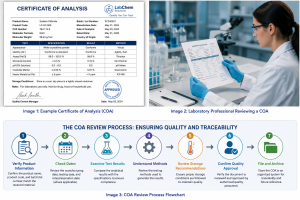
Although the exact format may differ between organizations, most Certificates of Analysis contain information such as product identification, batch or lot number, manufacturing or testing date, analytical methods used, specification limits, test results, storage recommendations, and approval by authorized quality personnel.
In laboratory environments, a COA serves as an important reference document that helps researchers verify documented characteristics before materials are used in analytical procedures, scientific studies, or educational activities. Proper review of a Certificate of Analysis contributes to consistency, documentation, and quality assurance throughout laboratory operations.
Why Is a Certificate of Analysis Important?
A Certificate of Analysis plays an essential role in laboratory quality management by providing documented evidence of the characteristics of a specific batch of material. Before materials are incorporated into laboratory work, researchers and quality assurance personnel often review the COA to verify that the documented test results align with the required specifications for their intended application.
One of the primary benefits of a Certificate of Analysis is traceability. Every COA is linked to a unique batch or lot number, allowing laboratories to identify exactly which production batch was tested. This level of traceability supports accurate record-keeping and can simplify investigations if questions arise about a material’s documented properties.
Certificates of Analysis also contribute to quality assurance by providing consistent documentation of analytical testing. Instead of relying solely on product labels, laboratories can review detailed information about the tests performed, the analytical methods used, and the reported results. This helps laboratory personnel make informed decisions before using materials in scientific procedures.
Another important function of a COA is supporting regulatory compliance and quality management systems. Many research institutions, universities, testing laboratories, and manufacturing facilities maintain documented procedures that require quality records to accompany materials. A properly prepared Certificate of Analysis helps demonstrate that testing has been completed according to established procedures and that the results have been recorded in a standardized format.
In addition to supporting laboratory operations, Certificates of Analysis promote transparency between manufacturers, suppliers, and researchers. By clearly presenting analytical data and quality information, a COA enables users to understand the documented characteristics of a material and maintain confidence in laboratory documentation.
Although a Certificate of Analysis is an important quality document, it should always be reviewed alongside other applicable documentation and internal laboratory procedures. Proper evaluation of all available information helps laboratories maintain high standards of quality, consistency, and scientific integrity.
Information Commonly Found on a Certificate of Analysis
Although the format of a Certificate of Analysis may vary between organizations, most COAs contain a standard set of information that helps laboratories identify the material, understand the testing performed, and review the documented analytical results. Knowing how to interpret each section of a COA allows researchers to make informed decisions and maintain accurate laboratory records.
Product Identification
The product identification section lists the official product name, product code, and other identifying information. Laboratories should confirm that this information matches the material received before it is used in any scientific or analytical work.
Batch or Lot Number
Every Certificate of Analysis is linked to a unique batch or lot number. This identifier allows laboratories to trace the material back to a specific manufacturing or production run, supporting documentation, inventory management, and quality assurance processes.
Manufacturing and Testing Dates
Many COAs include the manufacturing date, testing date, and, where applicable, a recommended retest or expiration date. These dates help laboratories understand when the material was produced and when the analytical testing was completed.
Analytical Methods
A Certificate of Analysis often identifies the analytical methods used to evaluate the material. Depending on the product and the laboratory, these methods may include chromatography, spectroscopy, titration, or other validated analytical techniques. Listing the analytical method improves transparency and helps users understand how the reported data was obtained.
Test Results
The test results section summarizes the measured characteristics of the material. Rather than simply indicating whether a product passed or failed, many COAs provide numerical values, specification ranges, and observations recorded during laboratory analysis. These results allow laboratories to compare the documented characteristics with their own quality requirements.
Storage Recommendations
Proper storage is essential for maintaining the quality and stability of laboratory materials. A COA may include recommendations regarding temperature, humidity, protection from light, or other environmental conditions that help preserve the integrity of the material during storage.
Quality Approval
Before a Certificate of Analysis is issued, the document is typically reviewed and approved by authorized quality personnel. Many COAs include a signature, approval date, or electronic authorization indicating that the analytical results have been reviewed according to the organization’s quality procedures.
Additional Notes
Some Certificates of Analysis also contain additional information such as safety recommendations, packaging details, laboratory references, or comments related to the analytical results. These notes provide useful context and can assist researchers in interpreting the document correctly.
How to Read and Interpret a Certificate of Analysis
Understanding how to read a Certificate of Analysis is an essential skill for laboratory professionals, researchers, quality assurance teams, and students working in scientific environments. Although the layout of a COA may differ from one organization to another, the process of reviewing the document generally follows the same principles.
Step 1: Verify the Product Information
Begin by checking the product name, product code, and batch or lot number. Ensure that these details match the material received. Accurate identification helps prevent documentation errors and supports traceability throughout laboratory operations.
Step 2: Review the Batch or Lot Number
The batch or lot number is one of the most important identifiers on a Certificate of Analysis. It links the document directly to a specific production or testing batch, allowing laboratories to maintain accurate records and trace materials if additional information is required.
Step 3: Examine the Analytical Results
Carefully review the reported analytical results and compare them with the listed specifications. Many COAs include both the expected specification range and the measured result, allowing users to determine whether the material met the documented quality requirements at the time of testing.
Step 4: Understand the Testing Methods
The analytical methods section explains how the laboratory obtained the reported results. Common methods may include chromatography, spectroscopy, titration, or other validated laboratory techniques. Understanding the testing method helps users interpret the analytical data more effectively.
Step 5: Check the Dates
Review the manufacturing date, testing date, and any recommended retest or expiration dates. These dates provide important information about when the material was produced, analyzed, and, where applicable, when it should be re-evaluated.
Step 6: Review Storage Recommendations
Many Certificates of Analysis include guidance on appropriate storage conditions. Following these recommendations helps preserve the documented characteristics of the material and supports good laboratory practice throughout its storage period.
Step 7: Confirm Quality Approval
Before relying on a Certificate of Analysis, verify that it has been reviewed and approved by authorized quality personnel. Depending on the organization, this approval may appear as a signature, electronic authorization, approval date, or official quality control stamp.
Best Practices for Laboratories
When reviewing a Certificate of Analysis, laboratories should maintain organized records, archive documents by batch number, and ensure that quality documentation is readily available for future reference. Establishing consistent procedures for reviewing COAs supports traceability, documentation, and overall laboratory quality management.
Common Analytical Tests Found on a Certificate of Analysis
The analytical tests listed on a Certificate of Analysis depend on the type of material being evaluated and its intended laboratory application. While the specific tests vary, many COAs include a combination of standard quality assessments that help laboratories verify documented characteristics before materials are used in research or analytical work.
Identity Testing
Identity testing confirms that the material being analyzed matches its documented description. Laboratories may use validated analytical techniques to verify the identity of a material and ensure that the correct product has been tested. This step supports accurate documentation and helps reduce the risk of material mix-ups.
Purity Assessment
Purity testing measures the proportion of the primary material relative to other detectable components. The reported purity value provides laboratories with documented information about the quality characteristics of the tested batch. Purity assessments are commonly included on Certificates of Analysis because they help users understand the composition of the material at the time of testing.
Moisture Content
Some materials can absorb moisture from the surrounding environment during storage or transportation. Moisture testing measures the amount of water present in the material, helping laboratories evaluate storage conditions and maintain consistent documentation. Monitoring moisture content can also contribute to long-term quality management.
Appearance and Physical Characteristics
A Certificate of Analysis may include observations about the material’s appearance, such as its color, physical form, or texture. These observations provide an additional reference point for laboratories when comparing received materials with documented quality records.
pH Measurement
For certain laboratory materials, pH testing is an important quality parameter. The pH value indicates the acidity or alkalinity of a sample and can be relevant for materials used in analytical procedures or quality control applications. When applicable, the measured pH is recorded alongside the required specification range.
Additional Laboratory Measurements
Depending on the material and the purpose of the analysis, a Certificate of Analysis may also include additional laboratory measurements, such as density, melting point, refractive index, particle size, or other validated quality parameters. The specific tests performed are determined by the applicable quality standards and analytical procedures for that material.
Why These Tests Matter
Each analytical test included on a Certificate of Analysis contributes to a broader understanding of the documented characteristics of a material. Rather than relying on a single measurement, laboratories review the complete set of analytical results to support informed decision-making, maintain traceability, and strengthen quality assurance practices. Together, these documented results provide a comprehensive overview of the material as evaluated under established laboratory procedures.
Common Analytical Tests Found on a Certificate of Analysis
The analytical tests listed on a Certificate of Analysis depend on the type of material being evaluated and its intended laboratory application. While the specific tests vary, many COAs include a combination of standard quality assessments that help laboratories verify documented characteristics before materials are used in research or analytical work.
Identity Testing
Identity testing confirms that the material being analyzed matches its documented description. Laboratories may use validated analytical techniques to verify the identity of a material and ensure that the correct product has been tested. This step supports accurate documentation and helps reduce the risk of material mix-ups.
Purity Assessment
Purity testing measures the proportion of the primary material relative to other detectable components. The reported purity value provides laboratories with documented information about the quality characteristics of the tested batch. Purity assessments are commonly included on Certificates of Analysis because they help users understand the composition of the material at the time of testing.
Moisture Content
Some materials can absorb moisture from the surrounding environment during storage or transportation. Moisture testing measures the amount of water present in the material, helping laboratories evaluate storage conditions and maintain consistent documentation. Monitoring moisture content can also contribute to long-term quality management.
Appearance and Physical Characteristics
A Certificate of Analysis may include observations about the material’s appearance, such as its color, physical form, or texture. These observations provide an additional reference point for laboratories when comparing received materials with documented quality records.
pH Measurement
For certain laboratory materials, pH testing is an important quality parameter. The pH value indicates the acidity or alkalinity of a sample and can be relevant for materials used in analytical procedures or quality control applications. When applicable, the measured pH is recorded alongside the required specification range.
Additional Laboratory Measurements
Depending on the material and the purpose of the analysis, a Certificate of Analysis may also include additional laboratory measurements, such as density, melting point, refractive index, particle size, or other validated quality parameters. The specific tests performed are determined by the applicable quality standards and analytical procedures for that material.
Why These Tests Matter
Each analytical test included on a Certificate of Analysis contributes to a broader understanding of the documented characteristics of a material. Rather than relying on a single measurement, laboratories review the complete set of analytical results to support informed decision-making, maintain traceability, and strengthen quality assurance practices. Together, these documented results provide a comprehensive overview of the material as evaluated under established laboratory procedures.
Product Short Description:
Buy Escaline Fumarate – a high-purity research chemical in the phenethylamine family, ideal for laboratory investigations into serotonin receptor activity and psychedelic analog pharmacology. Offered by Global Chem Solutions for research use only.
Table of Contents
- Introduction to Buy Escaline Fumarate
- Chemical Properties and Scientific Background
- Key Research Areas and Laboratory Applications
- Advantages of Research-Grade Escaline Fumarate
- Why Choose Global Chem Solutions
- Product Specifications and Quality Assurance
- Safe Handling, Storage, and Laboratory Guidelines
- Frequently Asked Questions
- Conclusion
Introduction to Buy Escaline Fumarate
Researchers exploring phenethylamine derivatives and serotonin receptor ligands can Buy Escaline Fumarate from Global Chem Solutions. Escaline Fumarate is a structural analog of mescaline that has been studied for its receptor interactions and pharmacological profile in preclinical models.
At https://globalchemsolutions.com/, we provide high-purity Escaline Fumarate specifically for scientific research. The fumarate salt form improves stability and solubility, making it suitable for a variety of experimental setups. Our commitment to quality ensures researchers receive consistent, well-documented material that supports reproducible results in neuropharmacological studies.
Chemical Properties and Scientific Background
Escaline Fumarate features a phenethylamine backbone with methoxy groups at the 3 and 5 positions and an ethoxy group at the 4 position. The fumarate salt enhances solubility compared to the freebase form. In research models, it is studied for its affinity at 5-HT2A and other serotonin receptors.
Scientific literature explores its comparison to mescaline and related compounds, providing context for receptor binding and functional assays. Researchers often reference peer-reviewed sources when designing experiments with this analog.
Key Research Areas and Laboratory Applications
Scientists Buy Escaline Fumarate for investigations such as:
- Serotonin receptor binding and functional activity assays
- Structure-activity relationship (SAR) studies in phenethylamines
- Comparative pharmacology with mescaline and related analogs
- Analytical method development and validation
- Neurochemical signaling pathway research
- Behavioral models (where approved by institutional guidelines)
The compound is suitable for in vitro receptor assays and other controlled laboratory techniques. All use must comply with institutional ethics and legal requirements. This product is intended exclusively for non-human laboratory research.
Advantages of Research-Grade Escaline Fumarate
High-purity Escaline Fumarate offers several benefits:
- Improved solubility in aqueous buffers for cell-based assays
- Stable salt form for long-term storage
- Consistent quality for reproducible experiments
- Versatility in receptor pharmacology studies
- Convenient powder form for custom solution preparation
These features make it a practical choice for both basic mechanistic studies and more advanced neuropharmacological research.
Why Choose Global Chem Solutions
When you Buy Escaline Fumarate, Global Chem Solutions delivers:
- High-purity material verified by independent testing
- Secure, protective packaging
- Fast and discreet shipping
- Responsive technical support
- Full Certificates of Analysis
- Competitive pricing for research budgets
We are dedicated to supporting the scientific community with reliable products and excellent service.
Product Specifications and Quality Assurance
- Chemical Name: Escaline Fumarate
- Form: Fine crystalline powder
- Purity: ≥98%
- Appearance: White to off-white powder
- Packaging: Vacuum-sealed containers
- Storage: Cool, dry, dark place
- Documentation: Detailed COA provided
Our quality assurance includes testing for identity, purity, and stability to ensure the material meets laboratory standards.
Safe Handling, Storage, and Laboratory Guidelines
Use standard laboratory PPE and work in a well-ventilated area. Store in airtight containers away from light, heat, and moisture.
Follow your institution’s safety protocols. Dispose of waste according to local regulations.
Frequently Asked Questions
What is Escaline Fumarate primarily used for in research? It is studied for serotonin receptor activity and phenethylamine pharmacology.
What quantities are available? Multiple sizes from small research amounts to bulk orders.
How should stock solutions be prepared? Dissolve in suitable solvents using an analytical balance for precision.
Is this product for human use? No. Strictly for laboratory and scientific research purposes only.
How fast is delivery? Orders are processed quickly with tracked shipping options.
Conclusion
Buy Escaline Fumarate from Global Chem Solutions for a premium research chemical that supports investigations into serotonin receptors and phenethylamine pharmacology. Our high-purity material, combined with excellent service, helps laboratories achieve reliable results efficiently.
Conclusion
A Certificate of Analysis (COA) is a fundamental quality document that supports laboratory research, quality assurance, and scientific documentation. By providing detailed information about a specific batch of material—including product identification, analytical methods, test results, and quality approval—a COA helps laboratories maintain traceability and confidence in their documentation processes.
Learning how to read and interpret a Certificate of Analysis is an important skill for researchers, laboratory technicians, quality assurance professionals, and students. Understanding the information contained within a COA allows laboratory personnel to verify documentation, maintain organized quality records, and support consistent laboratory practices.
As laboratory technologies and quality management systems continue to evolve, Certificates of Analysis remain an essential part of scientific documentation. Whether used in academic research, industrial laboratories, or quality control environments, a well-prepared COA contributes to transparency, traceability, and good laboratory practice.
By following established procedures for reviewing, storing, and managing Certificates of Analysis, organizations can strengthen their documentation systems and support high standards of laboratory quality management.
Certificate of Analysis